Sunday, 15 June 2014

Revelation on a stormy day

by Subhashis Das


the storm blows
 with the rage of an untamed mighty bull.
i hide beneath an old mango tree
which shakes reluctantly
as all her branches shriek.

right now,
i stand soaking under this tree...
i have no other place to shelter.
all fears of the aftermath of the wetness,
the fall of lightning on the tree
or
a branch suddenly breaking down on me
has ended; abruptly...

...and then, i lose myself.

here i stand, drenched
without a name and a haunting past.
i have no future, 
who am i, then?
i am forgotten by me.

this moment seems compete.
my life lived fully,
i have no where to go, nothing to do
save laugh louder, even louder
and experience Bliss.


(This poem is an experience on a stormy rainy afternoon during a trek from Khunti to Ranchi on 27.5.2004)


The unborn

by Subhashis Das

Credit: dare-to-think-beyond-horizon.blogspot.com


The Norwester in April uproot trees and
devastate shacks of the impoverished.
That unrelenting tempest is me.

The hot summer winds blow in the stifling June afternoons 
coercing you to bar your windows and doors.
That unwelcome heat is me.

The perpetual showers of wet August
make your day a drag.
That unpleasant downpour is me.

The razor cold icy winds blow in
January piercing through your aged bones.
That fierce jitters is me.

I am the dark threatening clouds in July.
I am the sultriness in mid-May.
I am the bite of the chill in December.
I am the wind, the clouds.

I am the sun, the crimson of the sky,
I am the dark in the night time and the gold in the sun,
I am the drop of water on the burning desert sands.
I am the nomadic Bhulaiya Birhor dwelling in the leaf Kumbas.
I am the migratory bird of Siberia.

I am Chowrasia’s tune of the pahadi.
I am the riff of Clapton strings.
I am Teejan Bai’s Mahabharata.
I am the yearning for a son,
I am the coyness of a bride.
I am the deep contentment of the cold water’s thirst in sultry summer,
I am the sound of the sweep of the dry leaves.
I am patriotism and the traitorous.
I am the famine, the green paddy fields.

The Eureka of Archimedes is me,
The pain of dignity in Khudiram’s mother is me,
The experiments of Gandhi with truth are me,
The tsunami of Chennai is me.

I am Vishnu, Zarathustra,Zen and Christ. I am the Buddha,
I am Hitler, I am the Mahatma.
 Rabindranath, Lalan, Kabir, Dylan and Tennyson too are me.
I am Jack the Ripper, Martin Luther and Che Guevra.

I am life, existence.
I am death, death’s life.
I am the origin, the end.
I am creation, destruction.
I am the bliss in your meditation.
I am the Nirakar Brahma and the Sakar Shiva.

Why need you look at me in separates?
I am indivisible, wholesome and complete.
I am the unborn, the uncreated.

I am the entire arrangement of existence.
I reside within and without you.
But then, I am yet unknown to you as you still hold to your name.


I happen only to the anonymous and to the awakened.

The shepherd boys

by Subhashis Das

The shepherds hang out on the tree while a portion of their herd graze below.


The shepherd boys or the “rakhal chelera” exalted in Bangla literature by numerous erstwhile poets and writers and even by the venerated Tagore himself are a dying breed today. 

Growing up on these playful carefree young lads in classic Bangla literature has carved a deep niche somewhere within me.With schooling around they no more tend their flock and in the process a major aspect of Bangla literature is on its way of fading away with time. As a result of which I haven’t quite confronted with them these days while meandering in the countryside.


One leisurely morning....


But when I do, I am transported to my self-created fanciful world where I have treasured many prized memories since childhood and among them is the cherished memory of the uninhibited pleasure I once obtained reading of these “rakhal cheles”.

During one such amble in the country I chanced on a shepherd-boy. His mere sight evoked many emotions in me.I looked at him,his herd...suddenly he smiled at me that is when I clicked (snap above).
But when I reviewed the photograph, his face had no smile. I turned around in hope of another snap, the lad had moved away with his herd...

The Magic of Punkri Burwadih Megaliths

by Subhashis Das

This was my umpteenth visit to the megaliths of Punkri Burwadih. The 23 km journey from Hazaribagh through dense Sal forests on the either sides, winding roads through ghatis like the Lohsigna and Likhlahi to the megaliths heals you.


Dense Saal trees dot the either side of the highway to the Punkri Burwadih

Arriving at the plains you spot the standing stones from a distance, beckoning at you. You cannot resist rushing towards them.


...amidst the ancient stones

Wonder how many times I have been here alone among the stones. I sit silently and the overpowering energy of the ancient stones gets you. You wonder how things may have had been thousands of years ago when they created this ancient megalithic site? Who were they with such understanding of the sky, the horizon, mathematics, astronomy and geodetics?


These palm trees are to the South of the megaliths and the Mahudi Hills are at the background.

You search for an answer as you gaze all around; the encircling hills, the tall palms, and the soft whispering breeze…if this is not then heaven then what is…you question yourself ?

Saturday, 30 November 2013

The weekly rural markets (Haat bazaar) of Hazaribag

Many of you may like to wander in the hinterlands of Hazaribagh where the weekly markets are a real show of the peasants.
These weekly haats are our priceless heritages and we should visit them once in a while.
Given below is a list of a few villages where weekly markets are held :


MONDAY : Charhi, Parasi, Fatah, Ichak, Barkkatha, Satrah Mile.

TUESDAY : Satrah Mile, Chadwa, Ghangri and Tati

WEDNESDAY : Ichak mod, Kandaber, Giddi and Satrah Mile.

THURSDAY: Maharajganj,Jhumra, Charhi, Dadhi and Belsagra.

FRIDAY : Parasi, Banadag, Bisrampur and Satrah Mile.

SATURDAY : Ghangri, Badkachappa and Giddi.

SUNDAY : Katkamsandi, Religadha, Ichak mod.


I could collect only a few of these weekly market dates of the said villages. If you are aware of these weekly markets please contribute.

Saturday, 20 July 2013

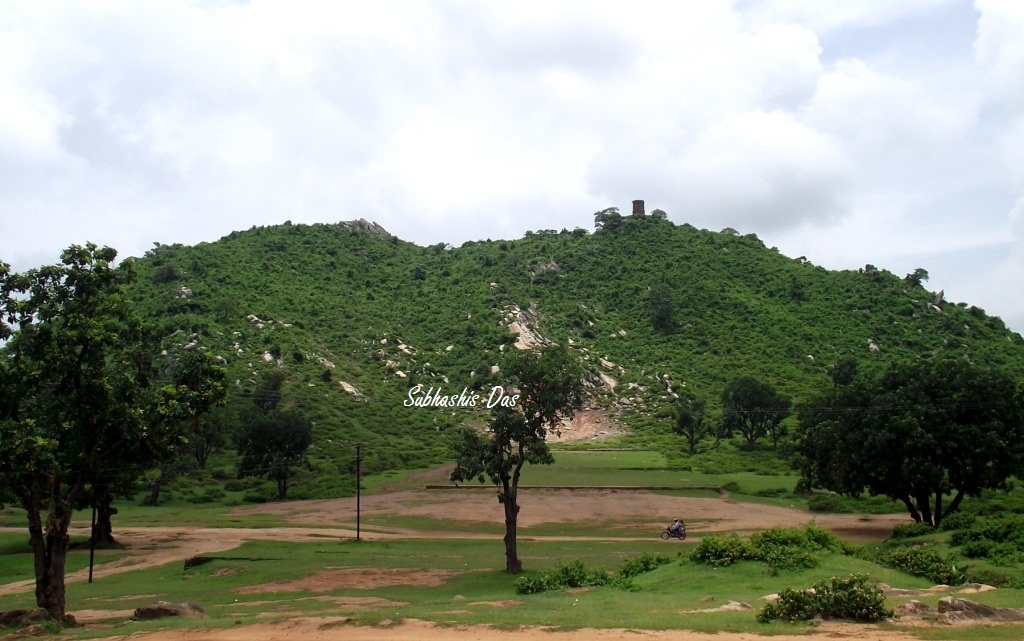
SEMAPHORE; THE SILWAR HILL TOWER. Hazaribagh


Subhashis Das


Residents of Hazaribagh surely must have seen the tower atop the Silwar Hill. We have  all wondered what on earth was it ? We knew this much that it was a British structure but were unaware of its purpose and its functioning till one Amitabha Gupta, a travel photographer from Kolkata came along. Amitabha has been doing an in-depth research on such towers across the country and has come across with a fascinating result. 


The Silwar Hill with the Semaphore Tower


A closer view of the double-storeyed Semaphore Tower on the Silwar hill


A rare sketch of the Silwar Hill and the kesura Hill with the old Benares Road. Now; Bagodar road. Courtesy Wikipedia Commons.

The name and purpose of the tower :

Research has shown the tower atop the Silwar Hill is actually an optical telegraphic tower constructed by the East India company during the period of 1816 - 1828.  Such towers are called SEMAPHORE TOWERS which in Greek means "Bear a sign". 

Semaphore Towers were first invented in France there after were developed by the British.

In 1813 It was decided by the East India Company to construct a network of Optical Telegraph Towers in India to communicate information and messages across the country. Several lines of Semaphores were planned to be laid down to major places from Calcutta. A line was planned between Calcutta and Bombay. And another between Calcutta and Chunar in the then United Provinces in which the Silwar Hill would be "on" the line..

On 21st Oct 1817 Sir George Everest was entrusted with the hectic task of surveying the distance of about 400 miles between Calcutta and Chunar. Assisting him his in this tedious job was Lieutenant Ferguson of the Ramgarh Battalion. French engineers were thereafter brought from France to build and layout a network of these Semaphores across the country.


Closer view of the the Semaphore Tower on Silwar Hill. From the book: Bihar; the Heart of India by Sir John Houlton

The tentative name of places in which the line of Semaphore Towers were to be erected between Calcutta and Chunar were Calcutta, Howrah, Hoogly, Bankura, Purulia, Chas, Chandankiari, Gomia, Hazaribagh (Sillwar), Katkamsandi/Itkhori (Bhusua), Kanhachatti, Dhangain,  Gaya and Chunar.

The line was created along the Old Benares road which is the Bagodar, Hazaribagh and Katmasandi Road today. Amitabha has yet not  been able to trace all the towers in this route as a couple of names of places of the location of the Semaphores are indeed missing.

The main operating station however was at Fort William Calcutta.


The Construction:

The completion of the Semaphore Tower of Silwar was done by 1855. The Silwar Semaphore Tower is a double storeyed structure with two same sized large doors facing the South-East. The circular structure is hollow from inside and is devoid of any ceiling. Inside there are holes on the walls for beams to be shoved inside them. The plastering has been done with bricks and chuna-surki. Outside channels are visible on which ropes were possibly laid to tie the mount atop the tower.


Three linear channels can be seen on the outer walls.


Ropes were probably used to tie the mount. Pic courtesy Amitabha Gupta.


The Functioning :

But how did the Semaphore tower atop the Silwar Hill function?

There were a few models of Semaphores the world over. Exactly which model was used in Silwar is difficult to adduce right now. However Amitabha is of the view that the shuttered system of mount on the tower may have been used to convey messages. 

The shutters were simple  mechanisms operated from inside the Semaphores.

Mounted on these towers were various wooden structures which were moved with pulleys fixed in the Semaphore which conveyed coded messages to the next tower. The person in-charge of these towers would watch each others' with telescopes for messages.

A four storeyed Semaphore with a shuttered mount. Such a mount was perhaps fixed on top of the Silwar Semaphore to transmit messages to the next tower and even receive from a previous one. Pic credit: Amitabha Gupta


Why were they deserted?

Firstly because maintaining these Semaphores across the country was an expensive matter. Secondly, Morse's Telegraph was invented roundabout that period which was a more viable and inexpensive mode of transmitting messages. 

Both took a toll on these rare monuments and they fell into disuse pushing them into history today.


Credit to Amitabha Gupta for his stupendous research on the Semaphore Towers. I am grateful to him for letting me use a few of his photographs as well as his  research. This is his blog:
http://amitabhagupta.wordpress.com/2013/07/15/optical-telegraph-in-india-the-forgotten-saga/#more-1564.

Friday, 8 March 2013

KAITHA TEMPLE. RAMGARH.


Subhashis Das


The old kaitha temple is situated on the NH 23 on the Bokaro-Ramgarh highway about 3 kms away from Ramgarh town.The temple was built by the Ramgarh Raja, the Singhs, supposedly around 1670. This temple is unusual in its architecture and also reveal shades of both European and Muslim influences. 


The facade

Ty upwards it's sides parallel to each other. The sikhara and the elevation of the temple is indeed bhe sikhara doesn't recede at the top as conventional sikharas of normal temples do. On the contrary it rises verticallased on the mandala but is devoid of a trishula and an amlaka.

The facade reveals the Bengal's 'aat chaala' design.

The garbhagriha or the inner sanctum of this double storied temple can be reached climbing quite a number of steps. The facade of the inner sanctum is designed in Bengal's "aat chaala" architecture.


The passage on the top floor meant for circumambulating around the garbhagriha has Muslim influences.

The ruined passage on the top floor

The ground floor according to folklores was used by the military of the Raja. This is ofcourse has been shunned by many as they regard that the bottom floor was possibly used by the queen and the women folk of the palace as changing rooms after a dip in a neighbouring pond before their puja

The profile of the sikhara from the first floor.

Although these are merely legends, the truth is perhaps buried with time. The bottom floor replicates the top floor and houses even a garbhagriha without any vigraha


New idols have been placed in the garbhagriha or the main sanctum and a little is renovated but a large part of this magnificence temple today lies in ruins.
I was also informed of an underground tunnel from this temple leading to the palace of the king a few kms away meant for the king and the queen to secretly come and worship here and return thereafter. But they couldn't me tell its whereabouts.


The inner sanctum or the garbhagriha reveal the Bengal's 'aat chala' design.


A close-up of the profile of the temple. The man in the foreground is a proposed descendant of the king's family.


The newly renovated steps leading to the inner sanctum.


The passage of the ground floor.


The entrance to the inner sanctum at the ground floor. Note the symbols used as designs.


Monday, 25 February 2013

CHUNDRU; THE GRAND CANYON OF HAZARIBAGH (JHARKHAND)

Subhashis Das

Prantik peeps through one of the vents in the stone at Chundru.

   Well Chundru is not exactly in Hazaribagh...but then it was in our possession prior to it being snatched away by our neighbour, Chatra.
    I had never heard of the place despite the fact I have been living here since '63. But then I had heard of the Grand Canyon in the US of A, seen its snaps and read a helluva lot about it. Imagine the blast when I stumbled into a smaller version of it, here in our good old Hazaribagh (read Chatra here).

   Folks, welcome to Chundru; Hazaribagh's very own Grand Canyon.

   Chundru is in Tandwa about a 50 kms from Hazaribagh. 
  Drive from Hazaribagh crossing Barkagaon and Keradiri towards Tandwa and you reach the bridge of the Gerua River and that is Chundru. The Gerua river has cut deep chasms and gorges into the hard rock of Chundru making the place a geological wonder indeed. 

  But I am here not to be academical but rather adventurous and may be even a trifle poetic.
 The water of the Gerua River which flows silently through the deep gorges is shallow and clear...you can walk in it amidst the raised walls of the chasms. 
    While you wade through the waters; be silent and feel... the place is magic.
   In the monsoons you can easily do some rafting here (if of course there were any rafts here).

    Wonder where the Government of Jharkhand and its Tourism Department is. Seen them anywhere by the way? Well I haven't.
      Chundru. 
      Just head for it. 

       Below are a few snapshots of the gorgeous Chundru...enjoy them.

     (CLICK ON EACH PIC FOR A  BIGGER PICTURE)


Alok and Jai Prakash have fun.


...if they can have fun why should I be left behind ?


This is how Chundru looks from the top. The river is completely hidden.

Being in here Prantik is just awestruck


Monday, 1 October 2012

Boards for Punkri Burwadih Megaliths

by Subhashis Das


The site board of Punkri Burwadih megaliths. I am flanked by Alok, Bubu. my wife and Prantik my son.


Setting up of the board a day prior


On the Autumn Equinox morning of 22nd Sept this year the visitors arrived at the megalithic site to find two huge boards welcoming them. One was put up at the site and the other at the road side. The boards were beautifully done.


A self-potrait at the megaliths


It has been years since I have been trying to get the megalithic sites of Hazaribagh (discovered by me ) protected by ASI, the state government or by the town administration. It is a sorry state of affairs that none of these people value Indian culture and heritage therefore they let all our ancient relics including primitive megaliths get destroyed. 
But the present Deputy Commissioner decided to play safe and ordered to put up boards in four megalithic sites in response to my application. These sites being Punkri Burwadih, Chano, Birbir and Banadag.
It all began with Punkri Burwadih on the Equinox morning.

I had written the English text and provided the photographs for all the boards. The Hindi one was translated and the layout designed at the hoarding store to my satisfaction.
The DC and his wife also visited Punkri Burwadih on the Equinox morning...the sunrise was unfortunately not visible due to the clouds.But the large depressed crowd deprived of the sunrise through the megaliths was not that sad as the boards were a matter of immense happiness for all.


Waiting for the Equinox sun...The DC his wife, Bubu, my wife , I and Prantik, my son.


Remember boards are NOT protection as the lands were not acquired by the government...the threat to all the megalithic site still remains.


The board on the site on the Equinox morning


Till the time of writing this, the site board of Punkri Burwadih was torn down (as expected) by the villagers surprisingly the road side one still remained and the remaining boards were still not been put up...


The road side board...the site board is visible in the distance to the right.


MOTHER/BREAST HILLS

Subhashis Das   The prehistoric world for us moderns may appear dark and mysterious. Research and profound study has shown a large part of t...